

What is the manufacturing process of silicone trivets and mats?
Jun 04, 2025
Silicone trivets and mats are indispensable items in modern kitchens, renowned for their heat resistance, flexibility, and ease of cleaning. As a seasoned supplier of silicone trivets and mats, I am excited to share the detailed manufacturing process behind these practical kitchen essentials.
Raw Material Selection
The journey of creating silicone trivets and mats begins with the careful selection of raw materials. High - quality silicone rubber is the cornerstone of these products. Silicone rubber is a synthetic elastomer composed of silicon, oxygen, carbon, and hydrogen. It offers excellent thermal stability, chemical resistance, and flexibility.
We source our silicone rubber from trusted suppliers who adhere to strict quality control standards. The raw silicone rubber typically comes in the form of a base compound, which may be further customized with additives to enhance specific properties. For example, pigments can be added to create a wide range of colors, and flame - retardant additives can be incorporated for safety purposes.
Mixing and Compounding
Once the raw silicone rubber is obtained, the next step is mixing and compounding. This process involves blending the base silicone compound with various additives in a large mixer. The additives can include curing agents, colorants, and fillers.
The curing agent is a crucial component as it initiates the cross - linking reaction that transforms the liquid silicone into a solid, elastic material. Different types of curing agents can be used, such as platinum - based or peroxide - based curing agents, depending on the desired properties of the final product.
Colorants are added to achieve the desired color of the trivet or mat. These can be in the form of liquid or powder pigments. Fillers, on the other hand, are used to improve the mechanical properties of the silicone, such as its hardness and tear resistance. Common fillers include silica, which can enhance the strength and durability of the silicone.
Molding
After the silicone compound is thoroughly mixed, it is ready for molding. There are several molding techniques that can be used to create silicone trivets and mats, including compression molding, injection molding, and extrusion molding.
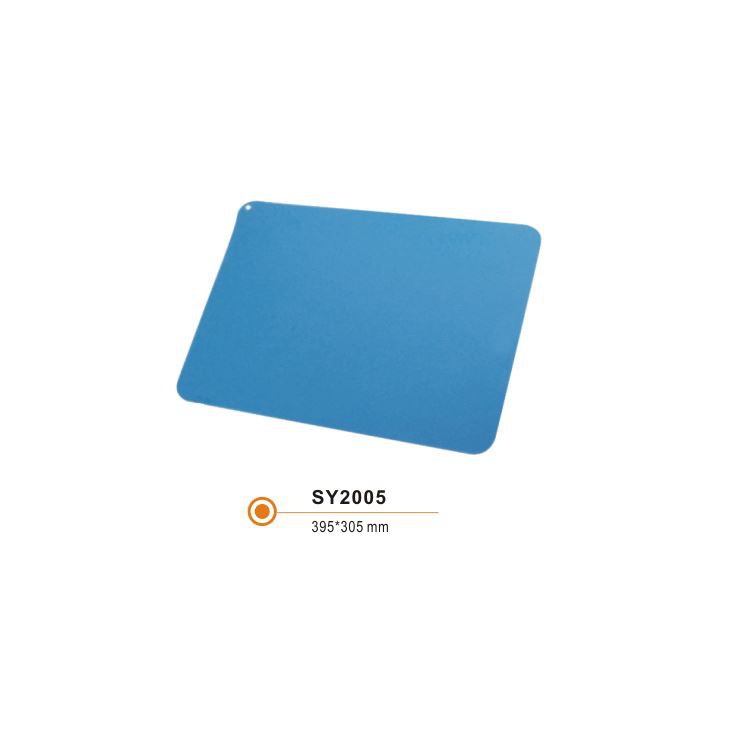

- Compression Molding: This is one of the most common methods for manufacturing silicone trivets and mats. In compression molding, a pre - measured amount of the silicone compound is placed into a heated mold cavity. The mold is then closed, and pressure is applied to force the silicone to fill the entire cavity. The heat and pressure cause the silicone to cure and take the shape of the mold. Compression molding is suitable for producing large - sized or complex - shaped trivets and mats.
- Injection Molding: Injection molding is a more precise and efficient method, especially for mass production. In this process, the silicone compound is heated and melted in a barrel and then injected into a closed mold cavity under high pressure. The high - pressure injection ensures that the silicone fills all the details of the mold quickly and accurately. Injection molding allows for the production of trivets and mats with consistent dimensions and high - quality surface finishes.
- Extrusion Molding: Extrusion molding is typically used for producing long, continuous silicone profiles, such as silicone strips or tubes. In the case of trivets and mats, it can be used to create certain edge or border components. The silicone compound is forced through a die, which gives it a specific cross - sectional shape. After extrusion, the silicone can be cut to the desired length and further processed.
Trimming and Finishing
Once the silicone trivets and mats are molded, they often have excess material, known as flash, around the edges. Trimming is the process of removing this flash to give the products a clean and professional appearance. This can be done manually using sharp knives or scissors, or automatically using specialized trimming machines.
After trimming, the trivets and mats may undergo additional finishing processes. For example, they can be sanded to smooth the surface, or printed with logos, patterns, or instructions. Printing on silicone can be achieved through processes such as screen printing or pad printing. Screen printing involves pressing ink through a mesh screen onto the silicone surface, while pad printing uses a silicone pad to transfer the ink from a plate to the product.
Quality Control
Quality control is an integral part of the manufacturing process. At our facility, we have a comprehensive quality control system in place to ensure that every silicone trivet and mat meets our high standards.
We conduct various tests on the products, including visual inspections to check for surface defects, dimensional measurements to ensure accurate sizing, and physical property tests to evaluate the heat resistance, tear strength, and hardness of the silicone. For example, the heat resistance test involves exposing the trivets and mats to high temperatures to ensure that they do not deform or release harmful substances.
Only products that pass all the quality control tests are approved for packaging and shipment. This helps us to provide our customers with reliable and high - quality silicone trivets and mats.
Packaging
Once the silicone trivets and mats pass the quality control tests, they are ready for packaging. We use a variety of packaging materials, such as plastic bags, cardboard boxes, or blister packs, depending on the customer's requirements.
Packaging not only protects the products during transportation and storage but also serves as a marketing tool. We can print our company logo, product information, and usage instructions on the packaging to enhance brand awareness and provide useful information to the customers.
Our Product Range
As a supplier, we offer a wide range of silicone trivets and mats to meet different customer needs. Our Silicone Trivet for Cookware is designed to protect your countertops and tables from hot cookware. It is heat - resistant and can withstand high temperatures without melting or warping.
Our Silicone Cup Mat is a stylish and practical accessory for your cups and mugs. It can prevent scratches on your furniture and add a touch of color to your kitchen or dining area.
In addition, our Silicone Baking Sheet for Cookware is perfect for baking. It is non - stick, easy to clean, and can be reused multiple times.
Contact Us for Procurement
If you are interested in purchasing our high - quality silicone trivets and mats, we welcome you to contact us for procurement discussions. Whether you are a retailer looking to stock our products or a distributor seeking a reliable supplier, we are here to meet your needs. Our team of experts can provide you with detailed product information, pricing, and customization options. We look forward to establishing a long - term business relationship with you.
References
- "Silicone Rubber Technology" by A. L. Rushton
- "Handbook of Elastomers" edited by I. K. Varma and C. P. Park